
Chudail
Also known as: Churel · Chudail · Chudailni
One of India’s most widely known female spirits, the Chudail appears in countless regional variants as a warning tale, a story of unresolved grief, and a presence tied to liminal night roads.
- Region
- Uttar Pradesh
- State
- North India (pan-regional)
- Danger
- High
- Habitat
- Crossroads, peepal trees, abandoned houses, lonely roads after dusk
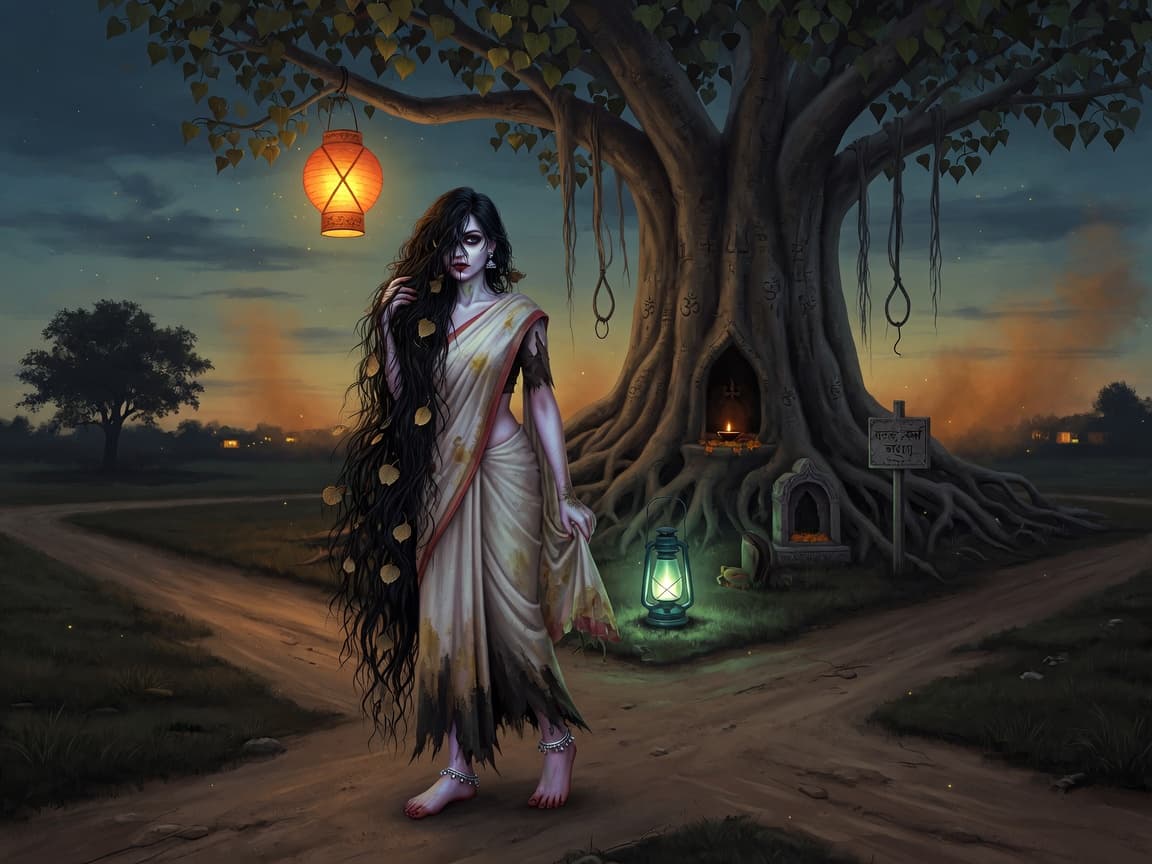
Appearance
Often described as a woman with long unbound hair, unusually pale or glowing skin, and feet that point backwards. Some regions add inverted facial features or a form that shifts from beautiful to terrifying once the traveller follows her. Details vary widely by language and village.
Behavior
Village accounts say she appears near peepal trees or deserted paths and may lure lonely travellers. Other stories cast her as a spirit of injustice—returning after a wrongful death, especially related to childbirth, abandonment, or violence. She is rarely a single ‘monster type’; she is a family of related legends.
Origin
Told across North India and neighbouring regions as the restless spirit of a woman who died in tragic or unjust circumstances. The figure absorbs local grief, moral warnings, and landscape lore.
Full Account
The Chudail (also Churel) is among the most recognisable figures in North Indian folklore. Popular cinema often flattens her into one stock image, but oral tradition is richer and more contradictory. In some villages she is tragic; in others she is a moral caution; in still others she explains misfortune on lonely roads.
Recurring motifs include backwards feet, unbound hair, the peepal tree, and the hour after dusk. Yet even these are not universal. Punjab, Uttar Pradesh, Bihar, and Rajasthan each hold versions that differ in name, cause of death, and how the living should respond.
BhootKosh documents the Chudail as a cultural category, not a single verified entity. When reading or collecting stories, note the region, language, and whether the teller treats the figure as a ghost, a metaphor, or both.
Related archive entries include Shakchunni, Daayan, and Mohini Yakshi—figures that share motifs of female unrest and social boundary, while remaining distinct regional traditions.
Cultural Notes
Treat regional variants as distinct oral traditions rather than one fixed ‘canonical’ monster. Names and attributes shift with language and community storytelling. Avoid sensational imagery that erases the grief and social context inside many tellings.
Sources & References
Widely attested North Indian oral motifs; generalised for educational use. Field versions should always be attributed to place and teller when known.
Related Spirits
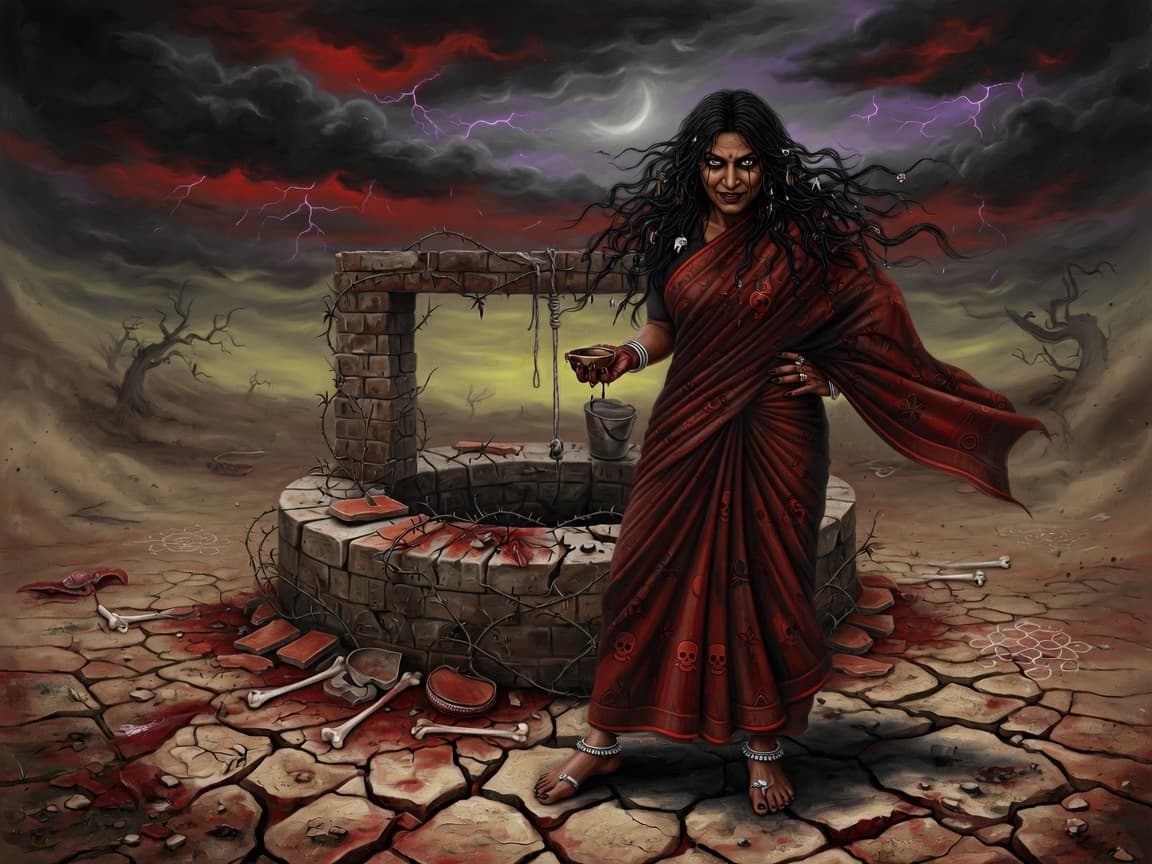
Daayan
Rajasthan · Central & North India (pan-regional)
Daayan lore blurs ghost story and witchcraft accusation—documented here with cultural and ethical ca…
View entry →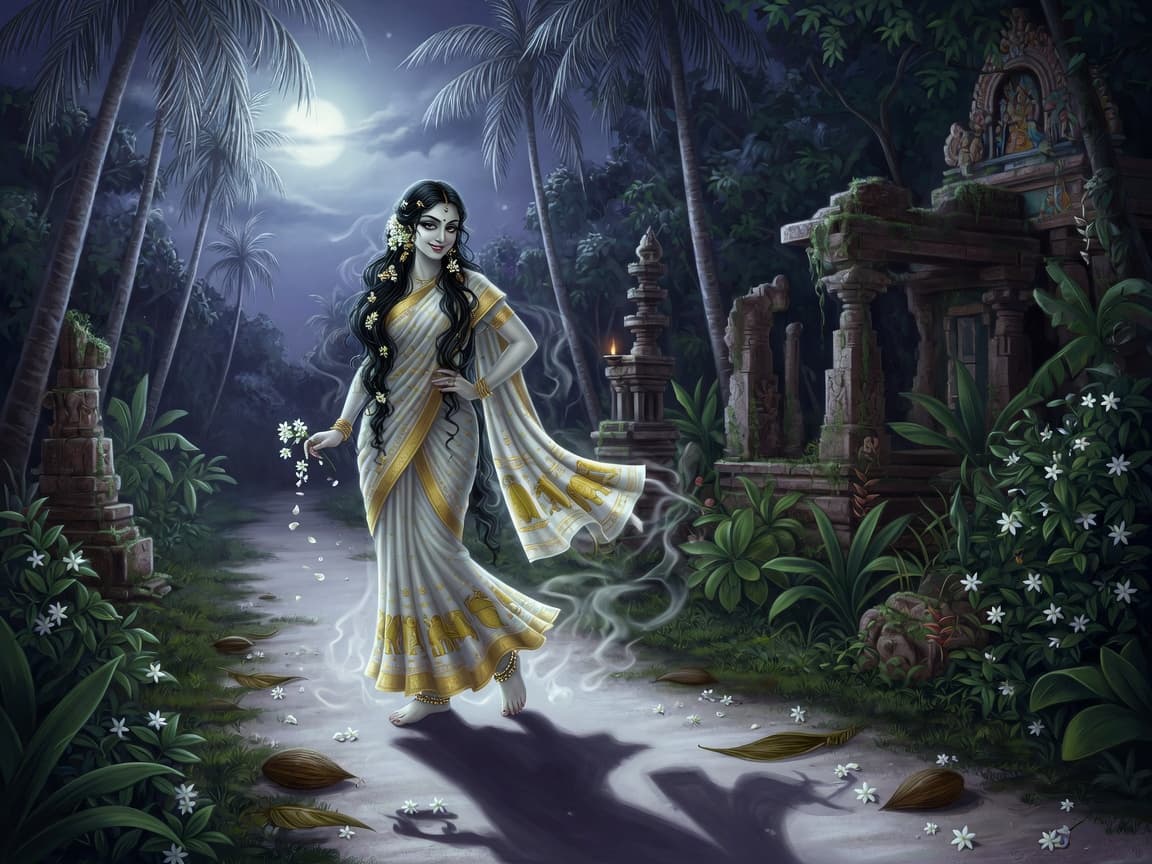
Mohini Yakshi
Kerala · Kerala
Mohini Yakshi is Kerala’s famous night-time spirit of lonely roads—beauty as lure, landscape as stag…
View entry →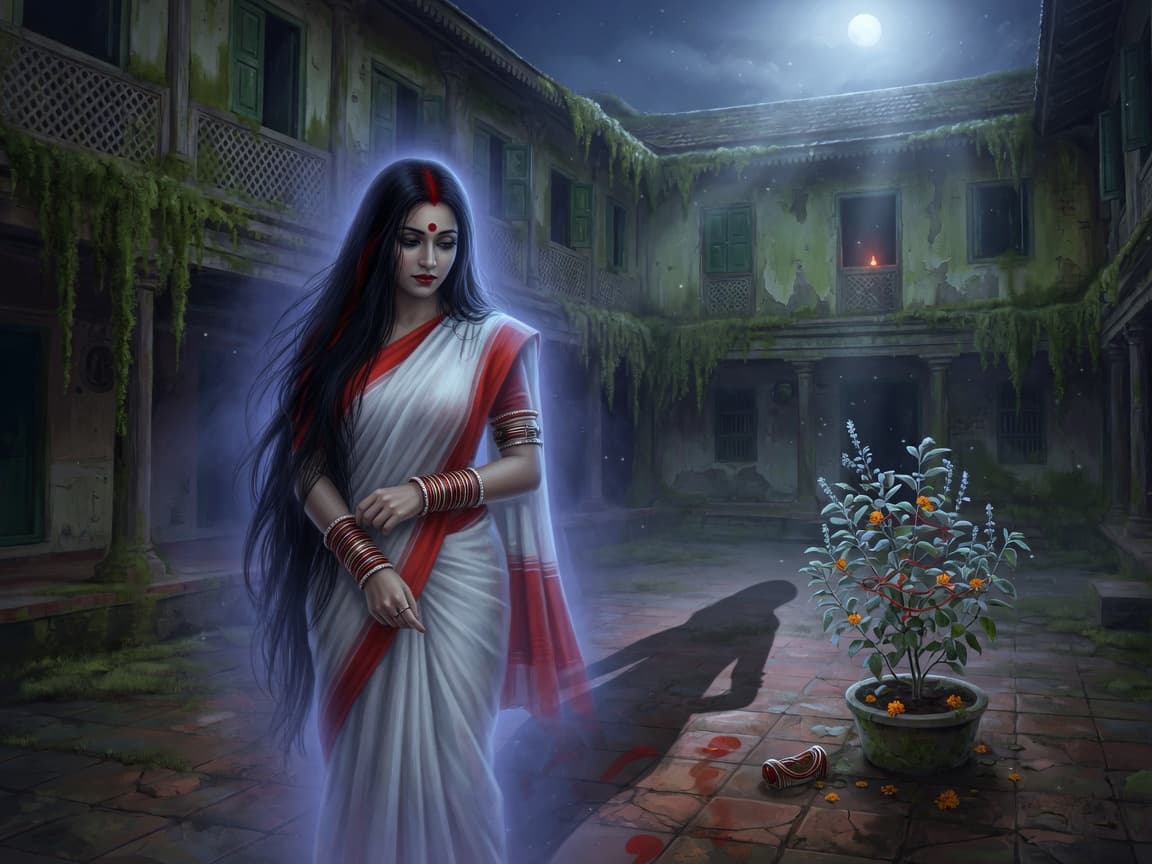
Shakchunni
West Bengal · West Bengal
Shakchunni is a Bengali female spirit associated with the figure of a married woman—part of a local…
View entry →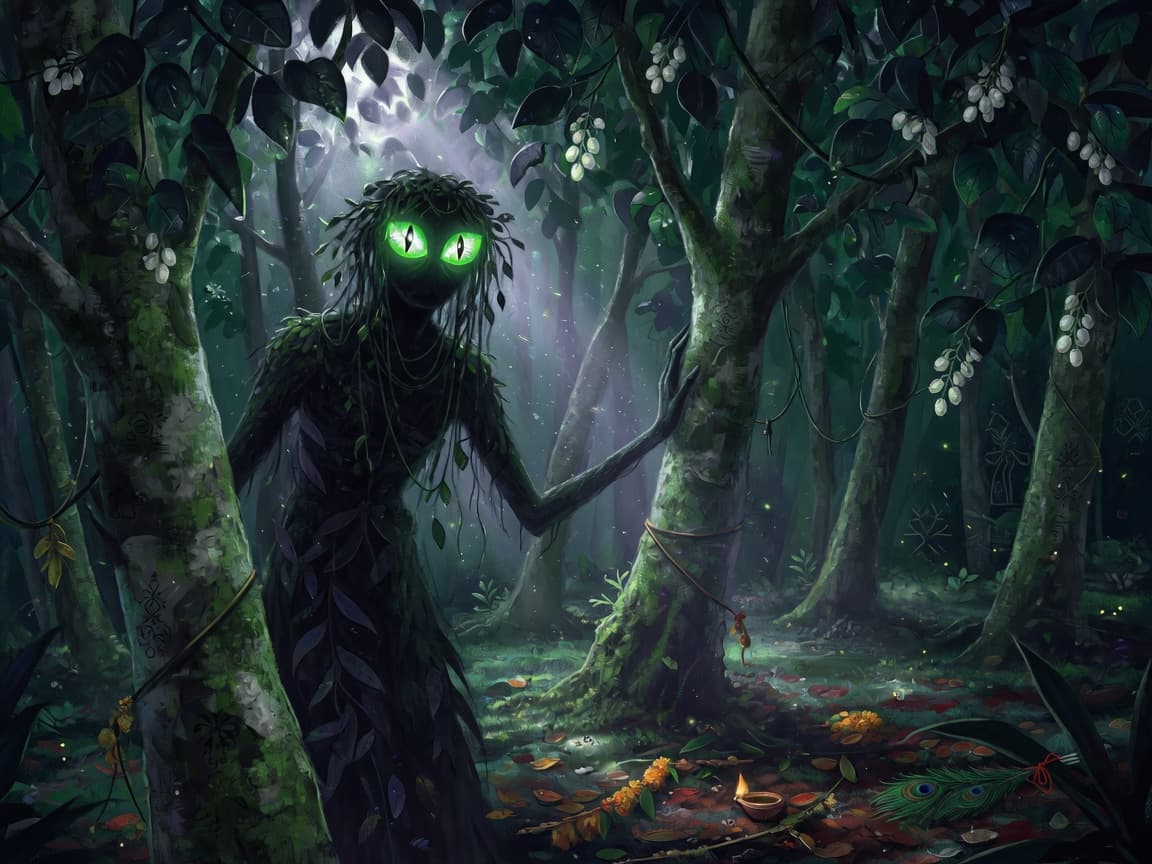
Hadal
Madhya Pradesh · Madhya Pradesh
Hadal (Hadaal) is a Central Indian female spirit of wells, trees, and night roads—related in tone to…
View entry →