
Nagin
Also known as: Nagini · Ichchhadhari Nagin · Naagin
Nagin lore blends ancient naga belief with popular shape-shifter romance and revenge tales.
- Region
- Rajasthan
- State
- Pan-Indian popular lore
- Danger
- High
- Habitat
- Rivers, lakes, ruined temples, forest paths, later film and folk theatre space
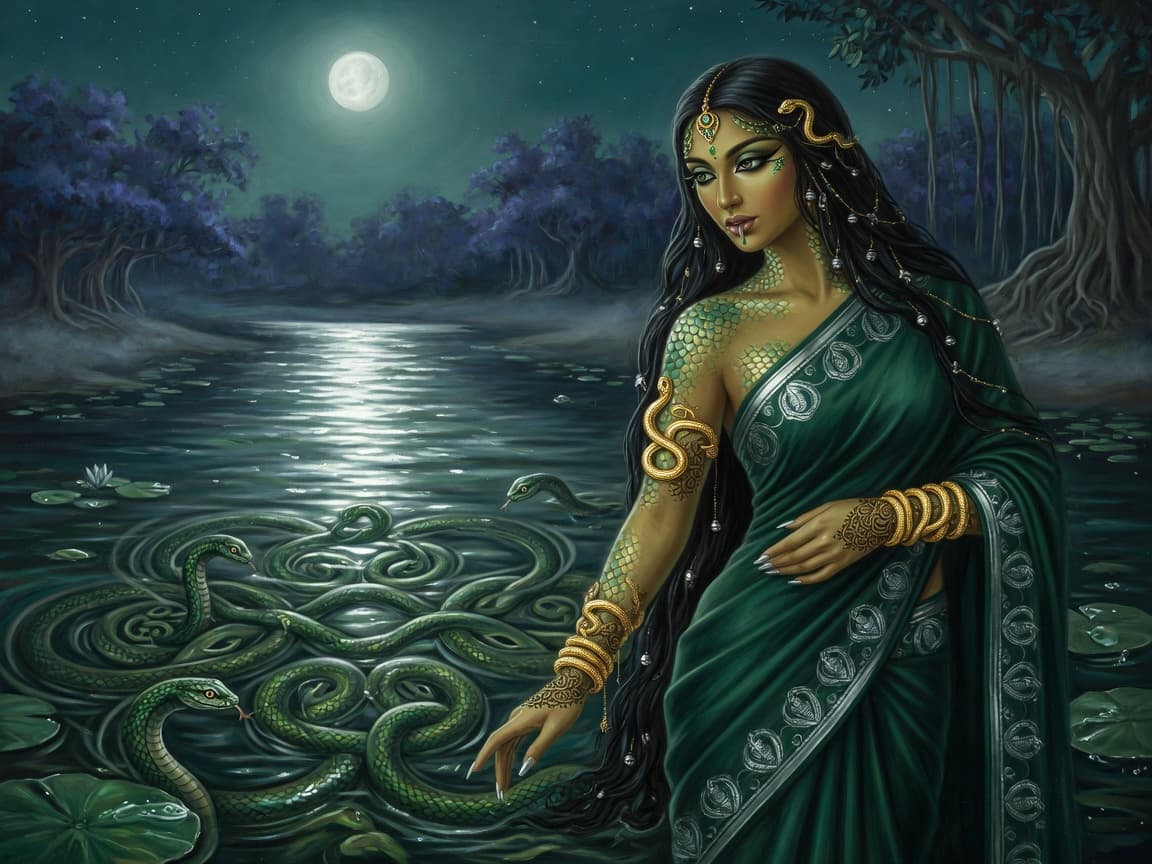
Appearance
A serpent who may take human form—often a woman—in popular and folk narratives. Classical naga imagery differs from modern screen Nagin styling.
Behavior
Themes of revenge, love, treasure protection, and shape-shifting dominate later popular tellings. Older naga traditions also include worship and cosmology.
Origin
Draws on naga traditions in Indian mythology, later elaborated in folk theatre, television, and cinema.
Full Account
While nagas are ancient mythological beings, the modern ‘Nagin’ figure is heavily shaped by folk performance and mass media. Archive entries should separate classical naga theology from contemporary pop folklore.
Popular stories emphasise the ichchhadhari (wish-formed) serpent who walks as human—love, betrayal, and vengeance driving the plot. These are living entertainment traditions as much as ‘ghost’ stories.
BhootKosh includes Nagin to show how mythic animal-spirits migrate into modern narrative culture without erasing older religious contexts.
Cultural Notes
Flag media influence when documenting twentieth- and twenty-first-century variants.
Sources & References
Naga mythology and later popular folklore (educational composite).