
Preta
Also known as: Pret · Peta · Peta-preta
Preta names the restless or hungry departed—at the intersection of religion, ritual, and ghost belief.
- Region
- Uttar Pradesh
- State
- Pan-Indian (religious-cultural)
- Danger
- Medium
- Habitat
- Cremation grounds, liminal spaces after death, ritual calendars of remembrance
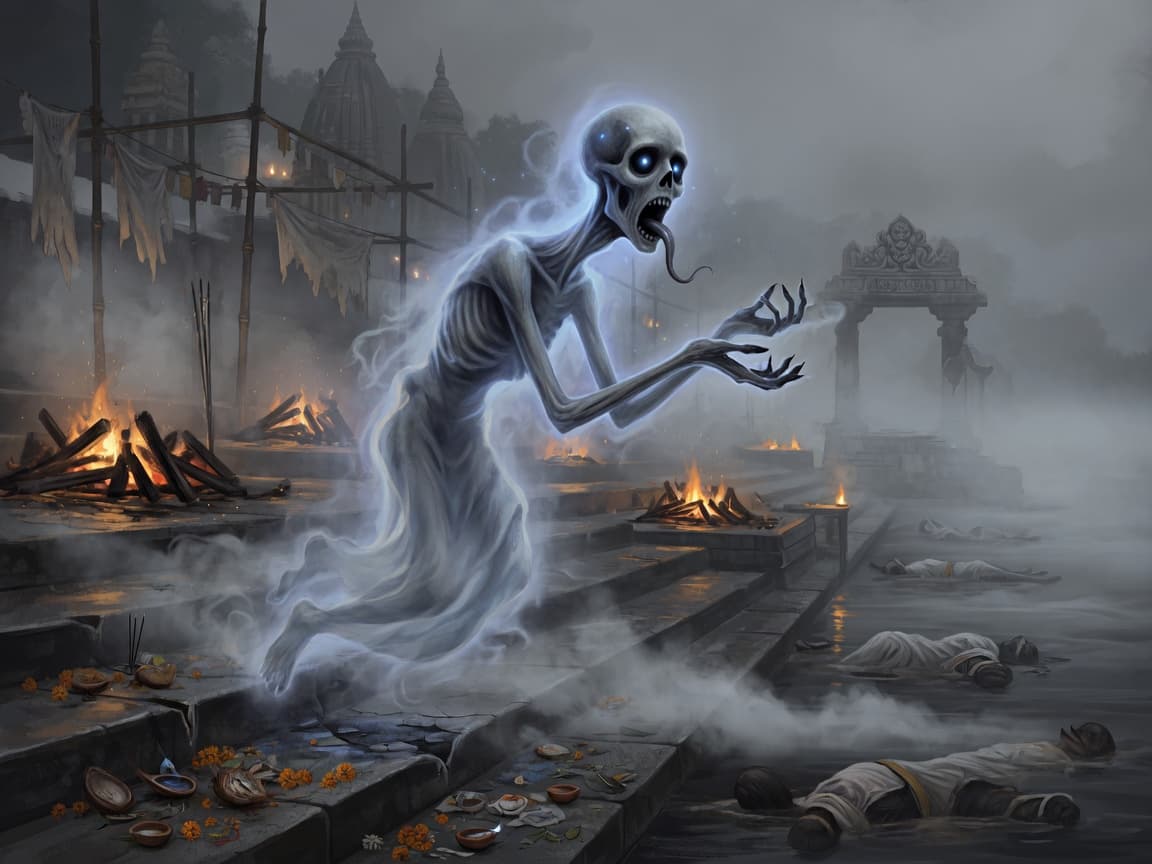
Appearance
In religious texts, often a hungry or unsatisfied departed spirit. Popular speech may use pret more loosely for ‘ghost’.
Behavior
Associated with incomplete funerary rites, lingering attachment, and the need for ritual release. Many communities perform rites precisely to prevent a soul from remaining pret.
Origin
Sanskrit preta concept within broader South Asian afterlife and ritual systems.
Full Account
Understanding Preta requires ritual context. This is not only a scare category; it is woven into how many communities think about death, duty, and care for the dead.
Folklore and religious practice intertwine more tightly here than in pure ‘monster’ stories. A pret may mark unfinished rites, unfulfilled longing, or a soul not yet at rest.
When comparing to Western ‘ghost’, note the ritual frameworks that give Preta its meaning—otherwise the translation flattens too much.
Cultural Notes
Avoid equating preta 1:1 with Western ghost without noting ritual and religious frameworks.
Sources & References
Indic religious and ethnographic literature (summary).